
Weight Loss Injections v Foodservice
There has been a lot of talk around the impact of weight loss injections on the foodservice industry. Whilst there are now some facts and figures to back up initial conjecture, there seems to be very little real life, first hand analysis of the effects directly from someone who lives, breathes and loves the foodservice industry. A personal perspective, if you like. So, to fill this gap, I thought I would share my own journey:
I have struggled all my life with weight problems, been on every diet, every ‘psychological’ programme, all of which had a small and short lived effect. The fact of the matter is that I love food, drink and conviviality, that’s why I have spent my life battling with weight gain. That’s also why I picked the greatest industry in which to be involved. It was not just about the constant snacking, but also eating and drinking as much quality food as I could. When I was in operations, I kept the ‘weight off’ due to the sheer number of steps in a shift. It was only when I became a consultant and physically ‘slowed down’ that the issues really started. I pretty much ballooned!
So, on the edge of turning 50, just over a year ago and having been told by every doctor, for every health issue, that losing weight would be a good start, I decided to invest in the new ‘wonder drug’. Invest is the right word – It cost me £200 per month until recently when it rose to over £300 per month. A considerable expense and one I am aware that I am fortunate to be able to afford.
Before I discuss the real effects on my foodservice life, I will give you some personal stats to put everything into context:
In November 2024, I weighed around 21.5 stone (136 Kg, 301 US lb) – I was a ‘big lad’ as my mum would say.
In November 2025, I weighed 15 stone (95 Kg, 210 US lb), I basically lost 30% of my body weight.
I no longer have back or sciatica issues, I don’t feel tired after walking up steps or doing exercise, I have more confidence in talking to people and life in general, and my mental health, specifically my view of me has improved immensely. I go to the gym at least 4 times and week (it hurt before) and walk my dog for an hour every day. In short, it has been an absolute game changer. It has cost me a fortune in new clothes (2XL to L) but saved me a fortune in food……
Obviously, I have to caveat the following by stating that this is my personal view but lets dive now into the food journey that I promised you!
Bloomberg state that weight loss drugs are set to wipe off $53bn in the F&B sector by 2035. This is a lot but which parts are specifically affected? This is where it gets interesting for me and I would question some projections and theories.
Let’s just take a minute to explain what this drug (Mounjaro in my case) does to you. Without getting ‘sciency’, it basically fools your brain into thinking your body is full and satisfied (like ‘normal’ people, you could say!) rather than feeling you could eat until you are about to literally explode but not being able to resist! It also slows down your digestion so you are actually full for longer. Lots of other things happen along the way and I am very happy to sit down and discuss them with you, if you really want, but lets focus on that bit for now.
I must stress this; These drugs do not affect your sense of taste in any way. This is key to understanding my ‘journey’ (I hate this term but you know what I mean). They can make you feel like you can’t eat much of particular foods (dairy in my case), but you still I like it and can eat small amounts of it. A recent article in the Caterer stated that "63% of people on Ozempic-like drugs order “considerably less” dining out than they would have done before they were prescribed the drug, which is beginning to impact the restaurant industry." (research by Morgan Stanley).
I am still not a fan of lettuce, cant stand tomatoes, sugar free coke and think quinoa is pointless but I love cream, sweets, foe gras (the taste not the process), cake, chocolate and beer just as much as the next person. My capacity for eating these items until I am sick has gone, but I am not going to stop consuming these items altogether because, I reiterate, Mounjaro has not affected my taste.
As I see it, there are essentially 2 ways of losing weight that relate to this article.
1. Exchange ‘bad food’ for’ good, healthy food’.
2. JUST EAT LESS FOOD. What thin people often say!
There are a large number of larger people I know who are similar to me – Our food/ drink intake is not less balanced nutritionally than most people of a ‘smaller build’, it is just that we eat too much. I could argue (albeit without evidence) that as a percentage of food intake, my snacking was no bigger than someone with a ‘healthy BMI’, I just ate a lot more of everything. No off switch. Ever. I’m not saying I am everyone but I believe I probably am fairly average for a middle earning individual who can choose to eat ‘good’ food rather than the cheapest food.
As it happens, these make up the majority of people who can afford to take the injections - it is estimated that 80 – 95% of weight loss injections taken in the UK are from private (ie paid for) prescriptions. Doctors will only prescribe them in extreme and dangerous weight issues due to the prohibitive price, so its mostly taken by people who can afford it.
Based on my personal experience, I feel that some of the projections about the impact of these drugs on the foodservice industry are somewhat misguided. To be clear I do not necessarily disagree with the direction of some trends, but I sometimes question that weight loss drugs are the main reason or even a major factor. Lets look at some points (all figures from Bloomberg) :
Full calorie sodas dropping by 2.3 – 3.3%. I still don’t like diet coke, I just drink less full fat. However, I drink even less now that we have all been made more aware of how much sugar they contain.
There will be a shift to healthier alternatives, - bottled water, fruits , veg etc each gaining $4bn in the same period. There probably will be but not from weight-loss me. From more healthy-not-wanting-to-die-from- eating- too-much-processed-food me, definitely. Remember, I still hate tomatoes and I love bacon and sausages.
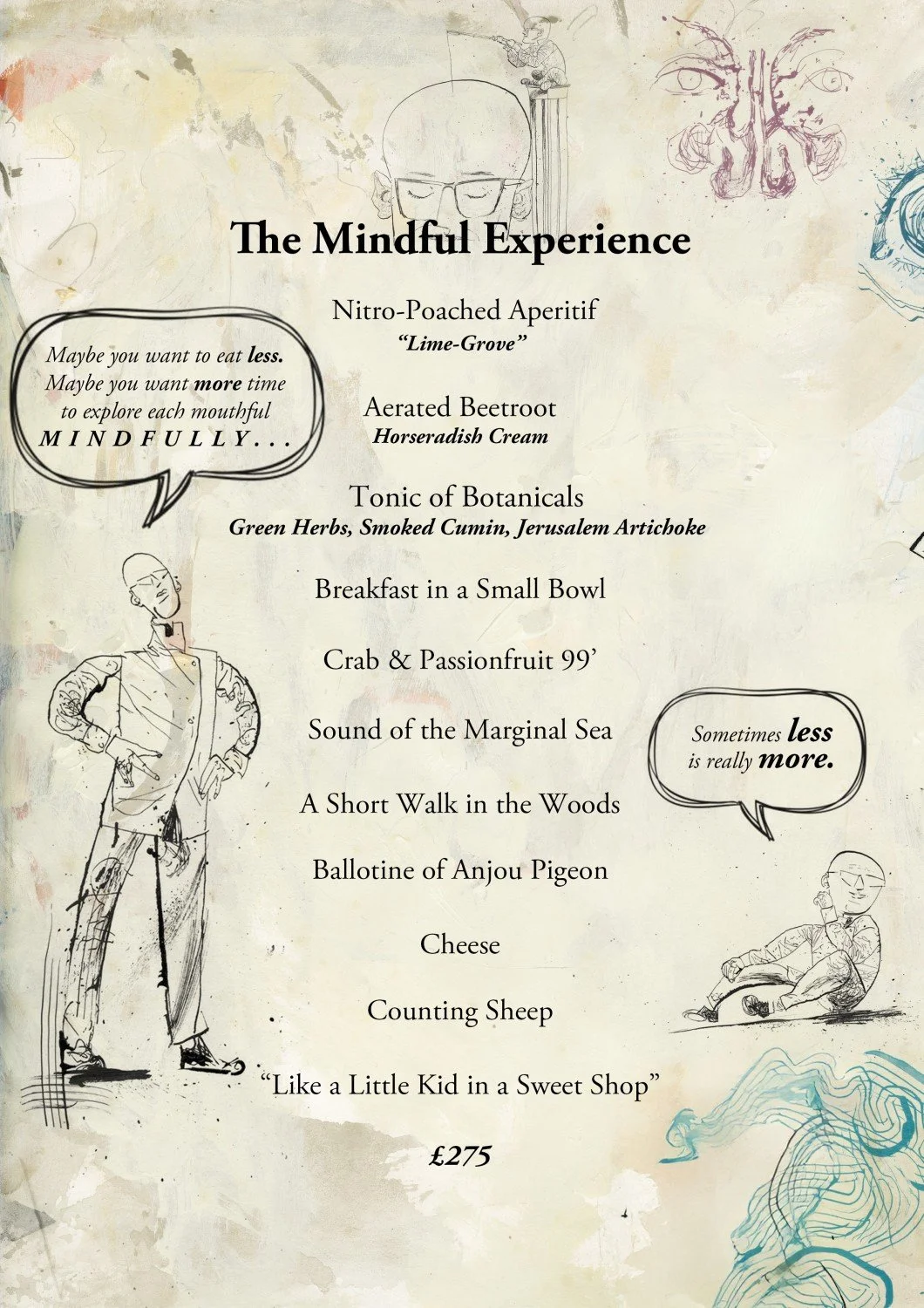
I saw an interesting talk on food trends a few days ago. It was very good. However, the presenter stated (paraphrasing) that “no one on weight loss drugs wants to spend £250 on a Michelin starred meal”. Absolutely incorrect – I do. I’m more of a street food, home cooking kinda guy but I do enter the world of fine dining fairly frequently. When I do now, it annoys me that I have to order a full meal as both the waste and cost seem unfair; I’m not going to eat it all. If you gave me the opportunity to spend £250 on a smaller version of the same £400 menu, I would spend it. It’s about the taste and the experience. Just because I have lost weight doesn’t mean I’m no longer fun or that I enjoy going out less, I am just not quite as cuddly.
Lets focus on this last point. My wife is small and slim and pointed out that she would also be happy if smaller portions were an option. So, dear Michelin chefs, do you want my £500 for a table of 2 or not?
We know that Heston Blumenthal does, as he has launched his 'mindful experience' menu at the Fat Duck, aimed at eating less but without impacting flavour. The menu is priced at £275 versus the standard menu at £350.
Although I have focussed on the finer end of the industry, you could say that the fast food market needs to take note also. You could also argue that they already have, but not necessarily intentionally. A friend who started the injections at the same time as me, swears by the McDonald’s saver menu. Like me, she has a relatively healthy and balanced diet. However, when nursing a hangover, very few things are as good as a McDonald’s. However, she can no longer ingest the same quantity of McChicken sandwich and finds the Chicken Mayo sandwich spot on! The Chicken Mayo is essentially the same as a McChicken sandwich but smaller. And, as it happens, cheaper.
A key point here is that it isn’t labelled a kids meal and is therefore not frowned upon if an adult orders one. In actual fact, lots of fast food outlets realised that they had to offer smaller portions a long time ago when healthier eating really became a ‘thing’ but people still couldn’t completely resist the fast food vibe. When the healthy food option was tried in fast food units, it did not work because no one was in there to eat healthy. If consumed as part of a balanced diet it was, and still is, a treat (or a hangover cure).
Maybe casual dining (and finer dining) operators should take note. Give me what I used to have but halve it and sell it to me for 2/3rds of the price and I (and I’m sure many others) will come and visit you. I still have the will and the want to go out and eat but, more importantly for me, I still have the taste buds. I have not done any calculations on this, but I feel sure you can make a similar profit margin on this type of menu (same items, smaller, less cost). You might not make as much, but you will make something. Please do it, I’m bored of lettuce!