Foodservice Trends 2025
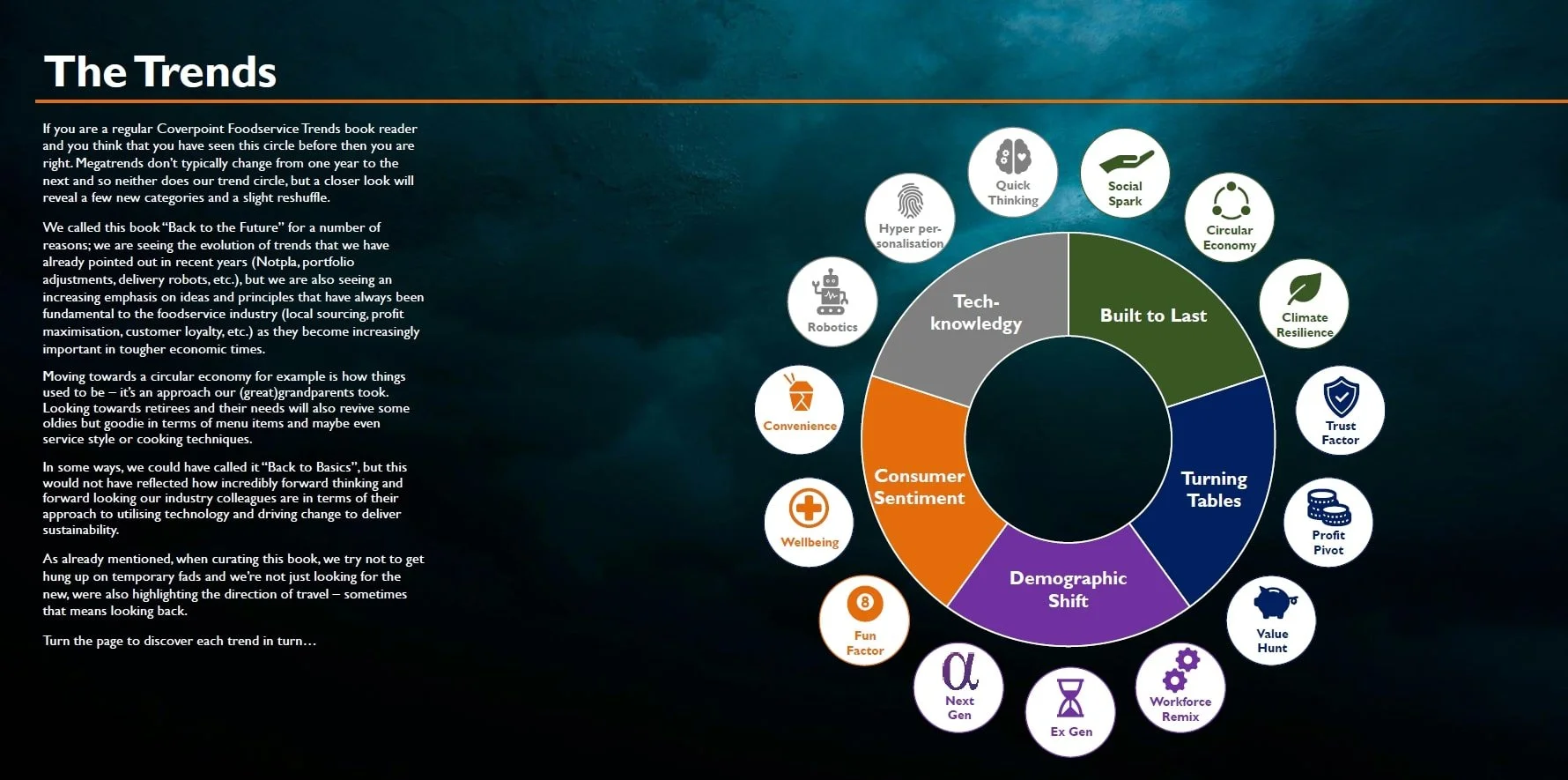
Foodservice has spent the last few years being tested from every angle. Labour costs, energy costs, ingredient costs, delivery habits, hybrid working, shifting guest behaviour, margin pressure and sustainability demands have all arrived at once. It has not been tidy, and it has not been easy, but it has made one thing very clear: the operators who stand still will not stay still. They will move backwards. That is the idea behind Foodservice Trends 2025: Back to the Future.
The name is not about nostalgia. It is about the slightly strange place the industry now finds itself in. Some of the most important ideas in foodservice sound futuristic: AI-powered ordering, robotic kitchens, autonomous delivery, electronic tasting tongues, carbon capture, biometric payments and hyper-personalised rewards. At the same time, many of the strongest answers are old fundamentals coming back with new urgency: value, trust, local sourcing, waste reduction, good service, simpler operations, community and food that people genuinely want to return for.
The global foodservice market is still growing, with projected CAGR estimates ranging from 3% to 10%, depending on geography and source. Delivery also remains a serious part of the market, making up 12% of UK restaurant sales in September 2024. Growth, however, is not the same as comfort. In Europe, where energy and ingredient costs have hit hard, fears around closures are still part of the conversation. Inflation has softened, and some operators are finding their footing again, but the pressure has changed how foodservice decisions are being made.
Convenience and experience are moving further apart. A quick lunch, airport meal, delivery order or staff dining offer is increasingly judged on speed, value, accuracy and ease. That is where kiosks, automation, central production, AI forecasting, geofencing and delivery technology are becoming useful rather than decorative. Elsewhere, guests are saving their spend for something more memorable. Competitive socialising, immersive dining, food halls, local hero brands and theatrical experiences all answer a different need: give people a reason to leave the house.
The guest is changing too. Gen Alpha, born between 2010 and 2025, is already influencing where families eat. According to the trends book, 71% of parents say their Gen Alpha children’s opinion is very influential when choosing a restaurant. This is a generation raised with TikTok, AI, global flavours, delivery culture, plant-based options and sustainability language as part of everyday life. Chipotle’s Roblox “Boorito” campaign, where players could explore a virtual restaurant and win real-life burrito vouchers, shows how food brands are already mixing gaming, digital identity and physical sales. Belly Bugs, the UK platform teaching children about their microbiome by treating gut microbes like pets, points to another shift: health education becoming playful, visual and child-led.
At the other end of the demographic scale, foodservice needs to pay much closer attention to older guests. By 2030, more than 2 billion people globally will be aged 60 or over. This audience is healthier, wealthier and more active than previous generations, but one in four adults aged 65 and over still experience social isolation. Food can help create routine, confidence and connection. Japan’s senior cafeterias, supported by subsidies and built around communal meals, lectures and intergenerational activity, are a useful example. So too are food halls such as Victory Social in Dallas and Sessions in the UK, where counter service, table service and private dining are being blended in ways that make the experience more accessible and human.
The labour story is just as important. The EU working-age population is projected to fall from 265 million in 2022 to 258 million by 2030, while younger workers expect flexibility, technology and development. Some operators are responding creatively. The Alchemist’s “Kitchen of the Future” uses self-cleaning pans, plated regeneration ovens and improved storage to support workflow. KFC’s VR escape room, guided by a virtual Colonel Sanders, turns chicken training into an immersive task. InterContinental Singapore’s “Culinary Superstar Hunt” generated more than 200,000 views and 120 applicants before hiring Chef Davide Giacomelli. Recruitment, training and productivity are becoming part of the brand story, not just the back office.
Sustainability has also moved beyond broad ambition. Around 32.2% of global food production is lost or wasted annually, and food waste contributes up to 10% of total greenhouse gas emissions. Circularity is therefore not a nice extra. It is a way to protect resource, reputation and margin. Baldío in Mexico City has removed bins from its kitchen and uses koji to ferment and repurpose food scraps. IKEA is applying circular economy thinking to foodservice through regenerative sourcing, waste-cutting technology, plant-based options and reusable packaging. Notpla, already known for seaweed-based packaging that decomposes within four weeks, has secured £20 million to develop more plastic-free materials. Lesaffre’s 2024 open call for carbon capture and utilisation ideas goes even further, looking at ways to repurpose CO₂ emissions from food processing into food-grade products.
Climate resilience is becoming a business discipline. Starbucks is aiming to reduce its carbon, water and waste footprints by 50% by 2030. Accor’s Planet 21 programme aims for carbon-neutral hotels in France by 2030 and net zero by 2050. New Belgium Brewing is working towards 100% renewable energy, including solar and biogas electricity. Noma’s next chapter, as a test kitchen dedicated to food innovation and new practices, reflects the same direction from a different part of the industry.
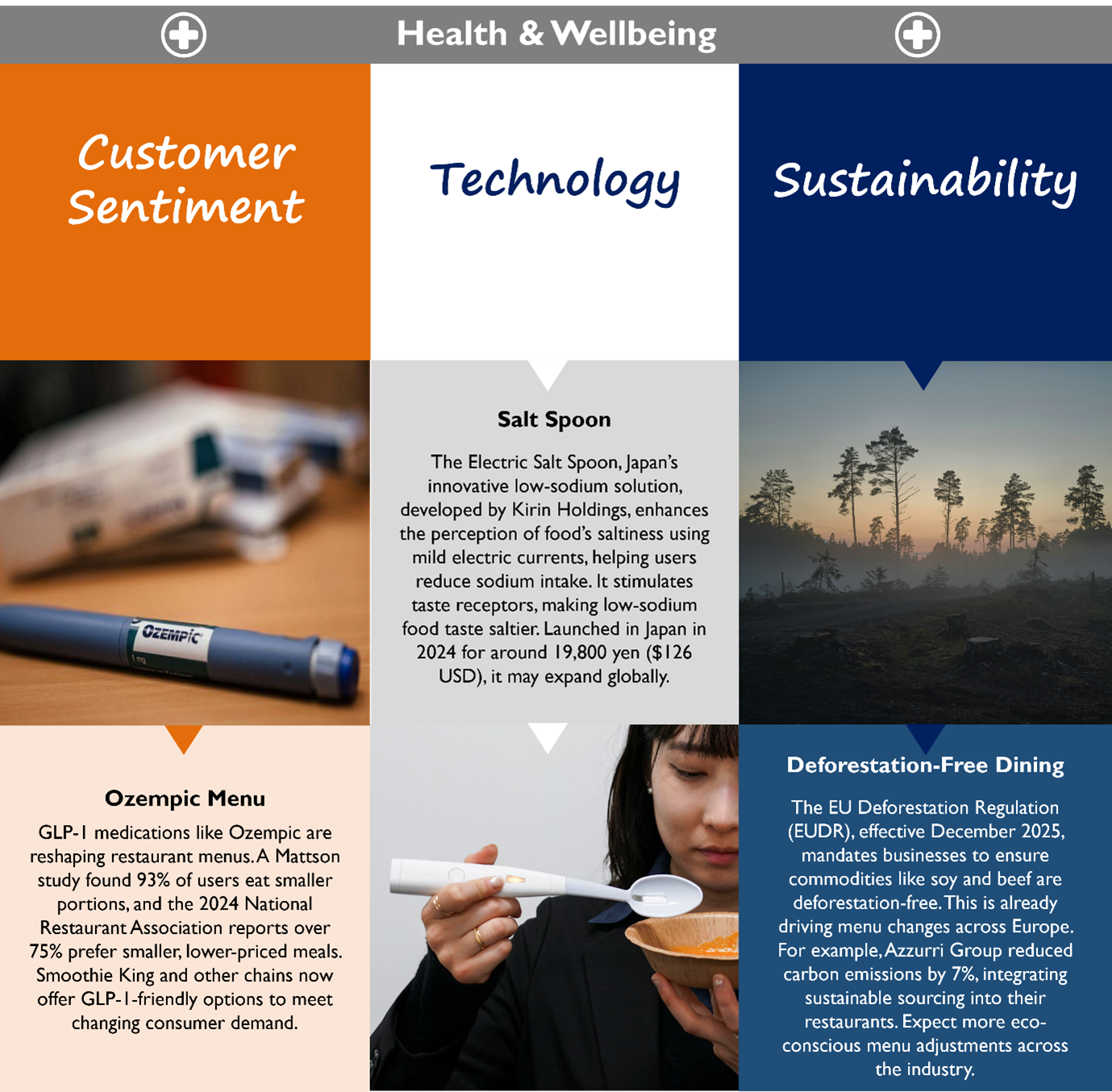
Technology is no longer waiting politely on the sidelines. AI adoption in F&B is forecast to move from 65% in 2024 to 91% in 2026. McDonald’s AI drive-thru ordering in the UK has reportedly cut wait times by 20% and improved order accuracy by 10%. Restoke in Melbourne uses AI to automate operations, track purchasing and optimise costs, with reported savings of up to $8,000 per week. Researchers at Penn State University have developed an AI-powered electronic tongue with 95% accuracy in detecting food issues. None of this replaces the pleasure of hospitality, but it does suggest that a lot of the invisible work behind foodservice is about to become smarter.
Robotics is following the same path. CaliExpress by Flippy in Pasadena has tested a fully autonomous burger and fries model. Wolt has launched autonomous delivery robots in Helsinki. Japan’s Skylark Group has introduced 3,000 BellaBot robots across 2,300 outlets. Berlin Airport will pilot Circus Autonomy One, a robotic kitchen designed to produce 2,000 meals a day with minimal human interaction. The best version of this is not a soulless restaurant. It is a restaurant where repetitive pressure is reduced and people have more time to host, solve problems and create a better guest experience.
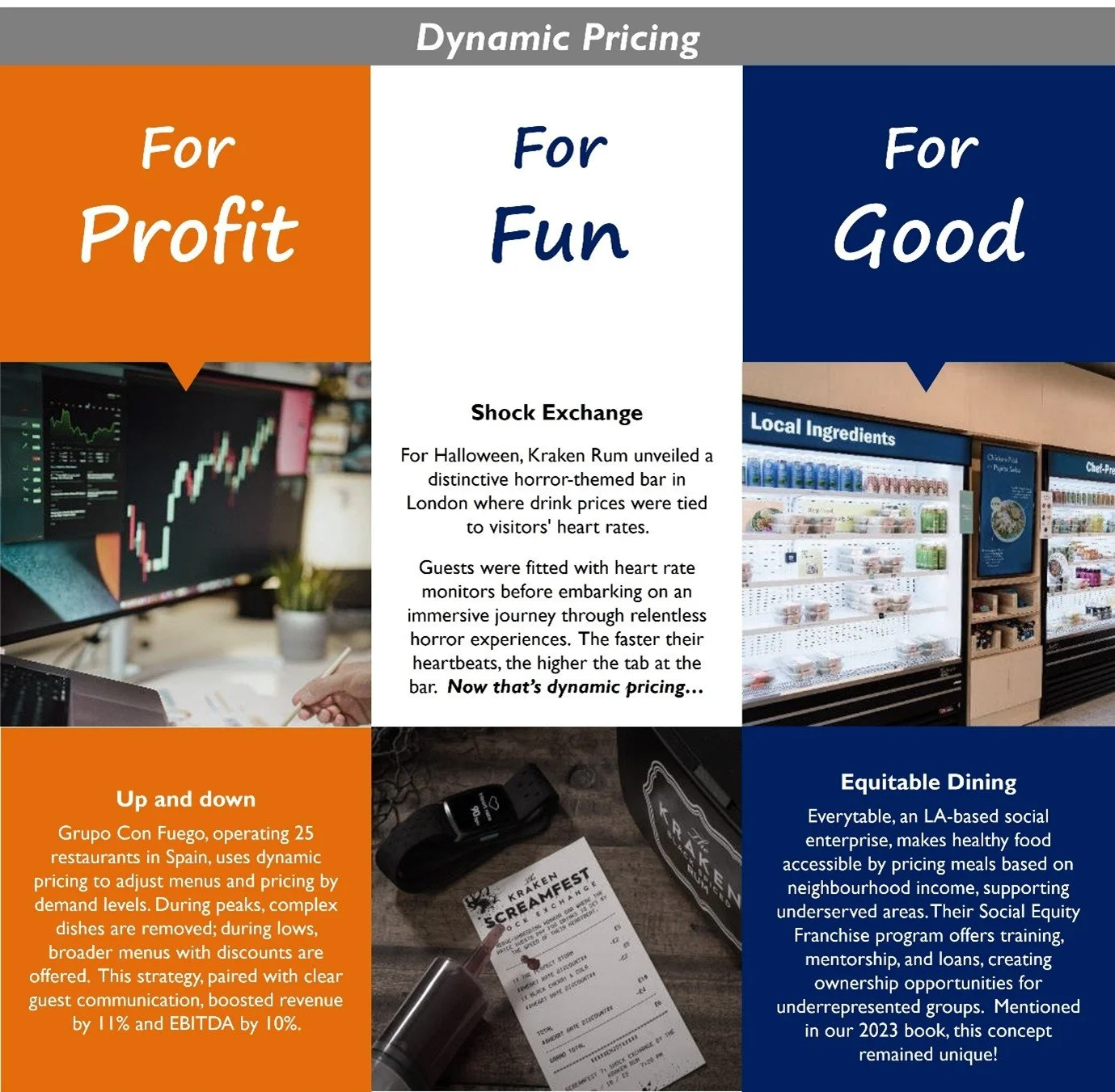
Money remains the sharpest test. In 2023, 38% of US operators said their restaurants were not profitable, and 53% reported cutting menu items because of higher food costs. Grupo Con Fuego, which operates 25 restaurants in Spain, uses dynamic pricing and demand-led menu changes. Complex dishes come off during peak times; broader menus and discounts appear when trade is quieter. The result was an 11% revenue uplift and a 10% EBITDA increase. Wagamama’s modular kitchens take another route, using prefabricated units for faster setup, lower cost and easier upgrades. Pesca in the Netherlands has introduced “Equity for Fish”, allowing customers to become shareholders and share in the brand’s growth.
Value is being rewritten rather than simply discounted. Deal-driven visits now account for 54 billion global foodservice visits annually. Food Republic in Singapore has introduced a subscription model for regular diners, offering discounts, meal deals and priority seating. Pizza Hut’s “Wow” stores in China sell smaller, more affordable portions, including pizza slices and pasta, aimed at younger and solo diners. Peet’s Coffee took a cheekier route with its “Disloyalty Program”, offering a free drink to people who uploaded proof of a competing coffee app.
Trust is becoming one of the most important currencies in the market. Consumers want to know where food comes from, how it is made and whether the claims are real. Chipotle is rolling out RFID ingredient tracking across the USA. Steenberg Farm in Cape Town uses QR codes on menus and packaging to show sourcing, farming practices, environmental impact and direct supplier links, including small-scale fishermen. OpenTable has moved away from anonymous feedback by displaying users’ first names and profile photos alongside reviews.
There is still plenty of room for joy. Salt & Straw’s “Mushroom Magic” ice cream range brings adaptogenic mushrooms such as Lion’s Mane and Reishi into indulgence. The Offline Club in Amsterdam asks guests to hand over their phones and spend time with books, board games, music and conversation. Pepper Lunch turns fast casual into DIY teppanyaki. Eatrenalin at Europa-Park serves a 10-course meal on a ride-like vehicle moving through sensory rooms. Kraken Rum linked drink prices to guests’ heart rates in a Halloween horror bar. Sessions has partnered with Netflix on delivery menus inspired by Squid Game and Stranger Things. Michelin-starred chef Rasmus Munk and Space Perspective are planning a six-hour dining experience 100,000 feet above Earth.
That mix tells the story of 2025 better than any single trend could. Foodservice is becoming more efficient and more emotional, more automated and more personal, more accountable and more playful. The winners will be the people who know when to use the machine, when to tell the story, when to simplify the menu, when to invest in experience and when to go back to the basics.
Foodservice Trends 2025: Back to the Future is available to download for free now on our website. Enjoy.