

Catering Tender Mistakes and How to Avoid Them
For many heritage venues, museums, galleries and visitor attractions, catering is no longer a secondary visitor service. It is part of the visitor experience, a source of commercial income, a contributor to dwell time (or even footfall draw), and often an important part of events and hospitality revenue. Yet catering tenders are still too often treated as procurement exercises rather than strategic commercial decisions.
A well-run tender can attract strong operators, improve the visitor offer, increase revenue and create a healthier long-term partnership. A poorly prepared tender can result in weak bids, unrealistic financial promises, operational tension and years of underperformance. Here are some of the most common mistakes heritage venues make when tendering their catering — and how to avoid them.
1. Starting with the tender document rather than the strategy
One of the biggest mistakes is going straight to tender without first asking: what do we actually want catering to achieve?
Different venues need different outcomes. For some, the priority is maximising financial return. For others, it is improving visitor satisfaction, supporting a stronger events business, reducing operational risk, showcasing local suppliers, or creating a café offer that better reflects the venue’s mission. Before going to market, venues should be clear on questions such as:
· Is catering primarily a visitor service, a commercial income stream, or both?
· Should the offer support longer dwell time?
· Is the current model suitable for future visitor numbers?
· How important are events and private hire?
· Should the venue retain more control over quality, pricing and brand?
· Is the catering offer part of the venue’s identity?
Without this clarity, bidders are left to interpret the opportunity themselves. That often leads to proposals that are difficult to compare and may not support the venue’s wider objectives.Whatever it is, the way you tell your story online can make all the difference.
2. Providing poor or incomplete trading information
Good operators need good information. If a tender pack lacks reliable data, bidders will either price in risk, make conservative assumptions, or avoid the opportunity altogether. Venues should aim to provide as much relevant information as possible, including:
· Annual visitor numbers
· Monthly or seasonal footfall
· Current catering sales
· Transaction numbers
· Average transaction value
· Event catering income
· Number of events
· Current staffing or operating constraints
· Seating numbers
· Opening hours
· Utility arrangements
· Known operational issues
· Capital investment expectations
Where data is not available, it is better to say so clearly than to leave bidders guessing. Many heritage venues have complex trading patterns: school holidays, weather dependency, exhibitions, group visits, member traffic, Christmas events and private hire can all affect catering performance. A tender that does not explain these patterns makes it harder for operators to produce realistic bids.
3. Overvaluing commission and undervaluing quality
It is understandable that venues want a strong financial return. However, choosing the highest commission offer can be a false economy. A high commission percentage is only valuable if it is attached to a sustainable trading model. If the operator has overbid, the consequences may include:
· Higher menu prices
· Reduced staffing or lower food quality
· Less innovation and limited investment
· Pressure to renegotiate
· Poor relationship management and eventual contract failure
The better question is not simply “what commission will we receive?” but “what total value will this partnership deliver?” That total value includes income, visitor satisfaction, brand fit, event growth, operational resilience, sustainability, investment and the ability to work constructively with the venue team.
4. Using the wrong contract model
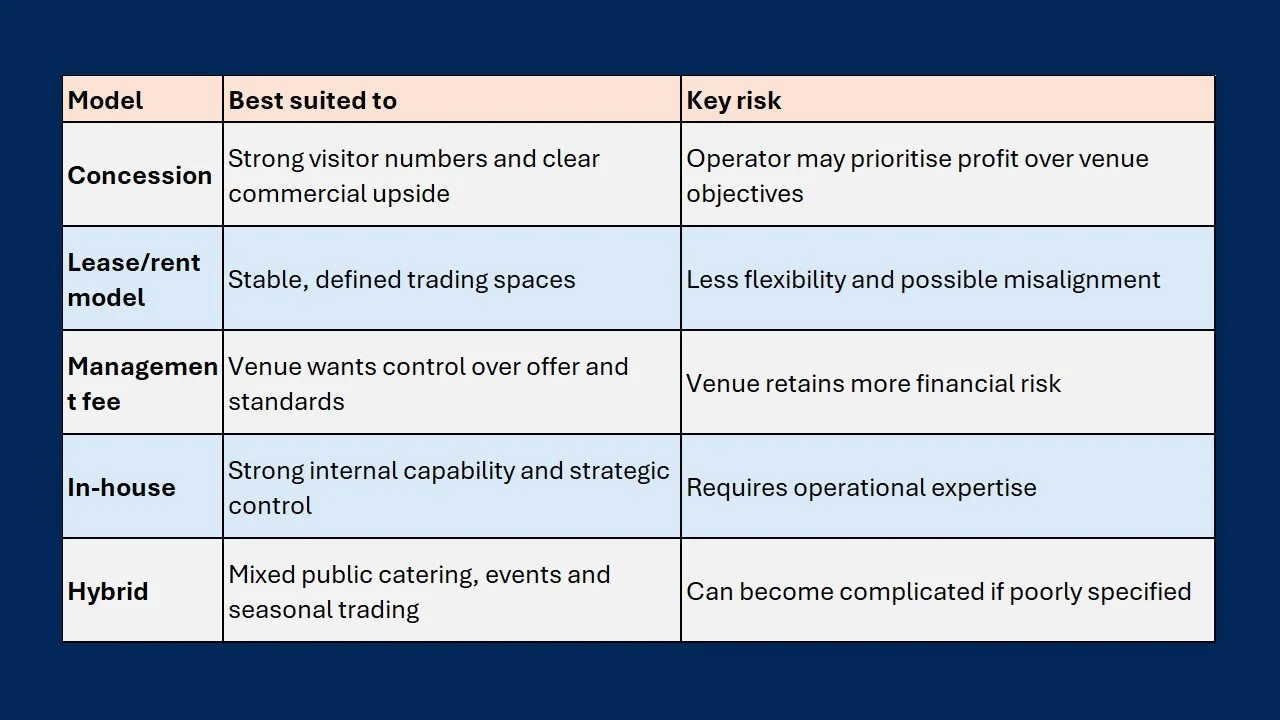
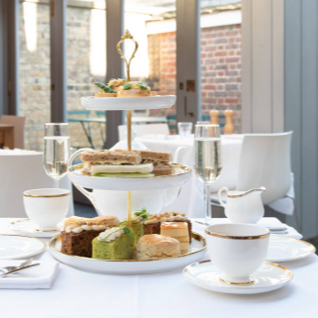
There is no single best catering contract model for all heritage venues. A concession may work well where there is strong footfall, clear trading history and a commercially attractive opportunity. A management fee model may be more appropriate where the venue wants greater control or where commercial risk is harder to transfer. In-house operation may suit some venues, but only where the skills, systems and management capacity exist. The right model depends on the venue’s objectives, trading profile, risk appetite and internal capacity. Selecting the model before understanding the commercial opportunity can lead to a poor fit. Common models include:
5. Ignoring the difference between public catering and event catering
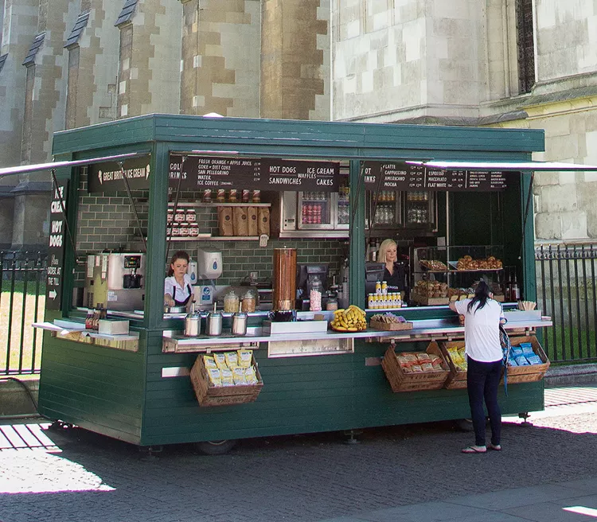
Public visitor catering and event catering are related, but they are not the same business. Public catering depends on visitor flow, conversion, speed of service, menu relevance, seating, weather and opening hours. Event catering depends on sales capability, venue hire strategy, operational flexibility, premium delivery, client management and often evening logistics.
A tender that bundles both together without explaining the relative priorities can create confusion. Some operators are excellent at public cafés but weaker at events. Others are strong event caterers but less experienced in high-volume visitor catering. Before tendering, venues should decide:
· Should public catering and events sit with the same operator?
· Is event catering exclusive or preferred-supplier based?
· How important is event income growth?
· Are there different commission rates for public and event catering?
· Who owns the client relationship for private events?
· What level of flexibility does the venue need?
This distinction is particularly important for heritage venues where events may be commercially attractive but highly operationally sensitive.
6. Failing to assess operational constraints honestly
Heritage venues often have catering challenges that are not obvious from a simple site plan. These might include:
· Listed building restrictions
· Limited kitchen extraction
· Long service routes and restricted delivery access
· Poor back-of-house space and waste removal constraints
· Peak-time congestion
· Inadequate power or drainage
· Planning or conservation limitations
· Neighbour / membership sensitivity
· Security requirements
If these issues are not clearly explained, bidders may make assumptions that later prove unrealistic. A good tender should be transparent about operational constraints. Strong operators will not be put off by complexity if they understand it properly. They are more likely to be put off by surprises after appointment.
7. Not allowing enough time for market engagement
A rushed tender rarely produces the best outcome. Operators need time to understand the opportunity, visit the venue, assess the numbers, consider investment, build a team and prepare a serious proposal. Venues also need time to test market appetite before issuing the tender. A better process includes:
1. Internal strategy review
2. Data gathering
3. Soft market testing
4. Tender pack preparation
5. Site visits
6. Clarification period
7. Proposal submission
8. Presentations
9. Negotiation
10. Contract finalisation
11. Mobilisation
The mobilisation period is often underestimated. Even after appointment, the operator may need to recruit, invest, redesign menus, install systems, agree branding, transfer staff, plan events and prepare for opening.
8. Writing specifications that are either too vague or too restrictive
Some tender documents are too vague: “provide a high-quality café offer appropriate to our visitors.” Others are too restrictive: detailed menu requirements, fixed pricing, narrow product specifications and limited room for operator creativity. The best tender documents strike a balance. They define the venue’s objectives, standards, constraints and expectations, while allowing bidders to propose the best solution. Venues should be specific about:
· Service standards
· Sustainability expectations
· Local sourcing ambitions
· Dietary requirements
· Visitor experience
· Reporting requirements
· Brand sensitivity
· Event requirements
· Investment expectations
· Performance review process
But they should leave room for bidders to show expertise, creativity and commercial insight.
9. Underestimating the importance of cultural fit
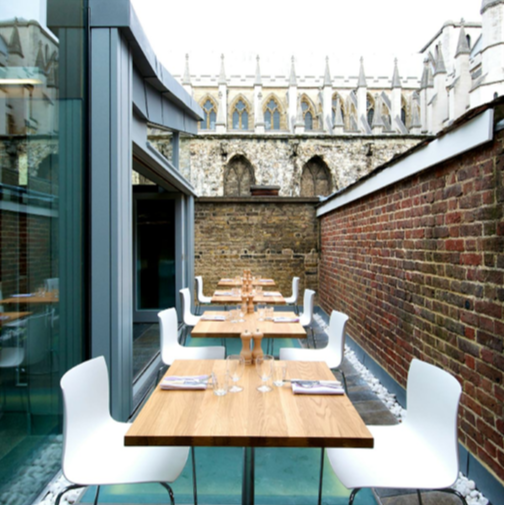
In heritage and cultural venues, the catering partner is not just a supplier. They are part of the visitor experience. The right operator needs to understand the venue’s audience, mission, tone and sensitivities. A café in a cathedral, museum, garden, castle or national collection cannot be treated exactly like a high-street food outlet. Cultural fit matters in areas such as:
· Menu style
· Pricing approach
· Staff behaviour
· Interpretation and storytelling
· Sustainability
· Use of local suppliers
· Event delivery
· Sensitivity to members, volunteers and donors
· Respect for the building or collection
A technically strong bid can still be the wrong choice if the operator does not understand the venue.
10. Forgetting contract management after appointment
The tender is not the end of the process. It is the beginning of the partnership. Too often, venues invest time in selecting the caterer but far less in managing the contract once it is live. A good catering contract should include:
· Clear KPIs
· Regular review meetings
· Open-book or transparent reporting where appropriate
· Visitor feedback measures
· Mystery visit or audit processes
· Event performance reviews
· Investment tracking
· Menu review processes
· Benchmarking
· Escalation routes
· Clear renewal and extension criteria
Without active contract management, even a good operator can drift. With the right structure, the relationship can keep improving over time.
A better way to approach a catering tender
A catering tender should not simply replace one operator with another. It should be an opportunity to rethink how catering supports the venue’s commercial, visitor experience and organisational goals. For heritage venues, the best results come when the tender is based on evidence, realistic expectations and a clear understanding of what makes the venue special.
Before going to market, heritage venues should ask themselves ten questions:
1. What do we want catering to achieve?
2. Do we understand current performance?
3. Do we have reliable visitor, sales and event data?
4. Is the current contract model right for the future?
5. Are public catering and event catering being considered separately?
6. Have we identified operational constraints?
7. Do we know what type of operator we want?
8. Are our financial expectations realistic?
9. Have we allowed enough time?
10. How will we manage the contract after appointment
Coverpoint Foodservice Consulting supports heritage venues, museums, galleries and visitor attractions with catering strategy, tender preparation, operator selection, contract reviews and front-of-house audits. If your venue is considering a catering retender, or wants to understand whether the current offer is performing as well as it should, we can provide an independent review and practical recommendations.